Albersheims
SKU:14222
1913–14 MLB Official World Tour Book Yearbook Chicago White Sox vs New York Giants
1913–14 MLB Official World Tour Book Yearbook Chicago White Sox vs New York Giants
Couldn't load pickup availability
Background & Purpose
- On January 27, 1913, John McGraw (manager of the New York Giants) and Charles Comiskey (owner of the Chicago White Sox) announced plans for a world-tour following the 1913 World Series.
- The tour was modeled on the earlier 1888-89 “Great Baseball Trip Around the World” but with major league stars and broader global scope.
- It aimed to promote baseball internationally, showcase American league talent, and expand the sport’s global footprint. President Woodrow Wilson even endorsed the effort as promoting international goodwill.
Participants & Rosters
- The touring party included players from both the Giants and White Sox, along with umpires, club officials, accompanying family members and staff.
- Not all star players took the full itinerary — for example, Hall-of-Famer Christy Mathewson declined the overseas leg of the tour.
A sample of the roster:
- Giants side: Jim Thorpe (used as major attraction), Larry Doyle, Fred Merkle, Mike Donlin, Hans Lobert.
- White Sox side: Tris Speaker, Sam Crawford, Buck Weaver, Joe Jackson (U.S. leg of the tour only) plus pitchers like Red Faber.
Route & Schedule
- The tour began domestically after the 1913 season with barnstorming games across the U.S., then moved to the Pacific boarding the liner RMS Empress of Japan from Vancouver on November 19, 1913.
- Overseas itinerary included: Japan (Tokyo, etc.), China, Philippines, Australia, Ceylon (now Sri Lanka), Egypt, Italy, France, United Kingdom (London) — before returning to the U.S. in March 1914.
Key Incidents & Challenges
- Near disaster at sea: During the Pacific crossing the Empress of Japan encountered a massive typhoon. The ship was driven off course 200 miles, waves of 60 feet battered the vessel, and there was serious risk of capsizing.
- Train derailment scare: On a European leg, their train near Rome approached a missing section of track over a gorge; the engineer stopped just in time, averting catastrophe.
- Logistical, cultural and physical difficulties: seasickness, unfamiliar fields, travel fatigue, and organizing exhibitions in non-traditional baseball countries.
Outcomes & Results
- During the overseas portion, the White Sox won 24 games, the Giants 20, with 2 ties.
- The tour was considered a commercial and promotional success: the spectacle of major-league baseball on foreign soil, visits to iconic sites (such as the Sphinx in Egypt), and receptions by foreign dignitaries.
- Returned to the U.S. in early March 1914; celebratory banquets followed in New York and Chicago.
Significance & Legacy
- The tour stands out as the earliest large-scale effort by Major League Baseball (via major league players) to take the sport globally.
- It helped raise baseball’s international profile, especially in Japan (where the American players played Keio University) and other non-traditional markets.
- The tour demonstrated the ambition of figures like Comiskey and McGraw to expand the sport beyond U.S. borders.
This publication was issued to commemorate the Chicago White Sox /New York Giants World Tour of 1913-14. Published by S. Black Willsden & Co., Chicago, in 1914 immediately following the tour, the 128-page book features hundreds of photos as well as a day-by-day diary of the trip. Included among the images are full-page photos of Charles Comiskey (organizer of the tour and owner of the White Sox), John McGraw (manager of the Giants), and James Callahan (manager of the White Sox), as well as individual portrait images of all of the tour members including Jim Thorpe, Tris Speaker, Buck Weaver, Sam Crawford, Urban Faber, Hans Lobert, Fred Merkle, and Mike Donlin. These same players and many others are pictured countless times throughout the book, both on and off the field, in such faraway lands as Australia, Japan, Egypt, Italy, France, and England." General Condition:
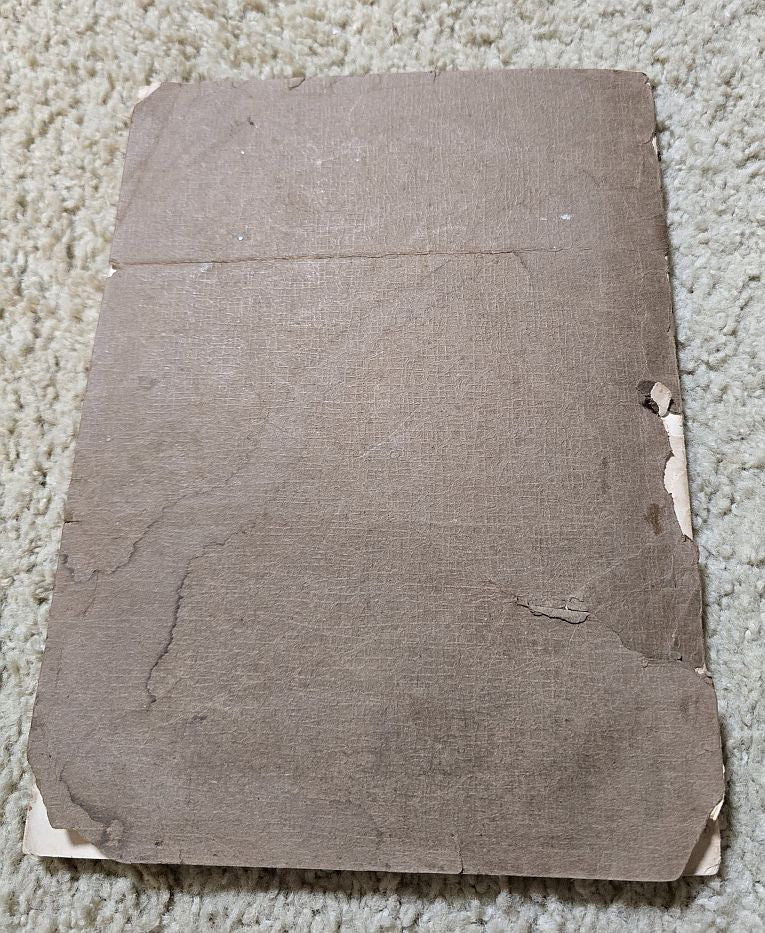
All pages intact, but dog eared, some rips, tears. We’d rate it poor to good condition, but considering that there aren’t many survivors, this may be your only chance of owning an original copy of this ultra-rare publication that was printed and given out to members of the tour and press.
Share